Body Type Calculator
Use Body Type Calculator to find what your body shape is and explore different female body types. The body shape calculator helps you understand your figure, body proportions, waist to hip ratio and natural shape in seconds.
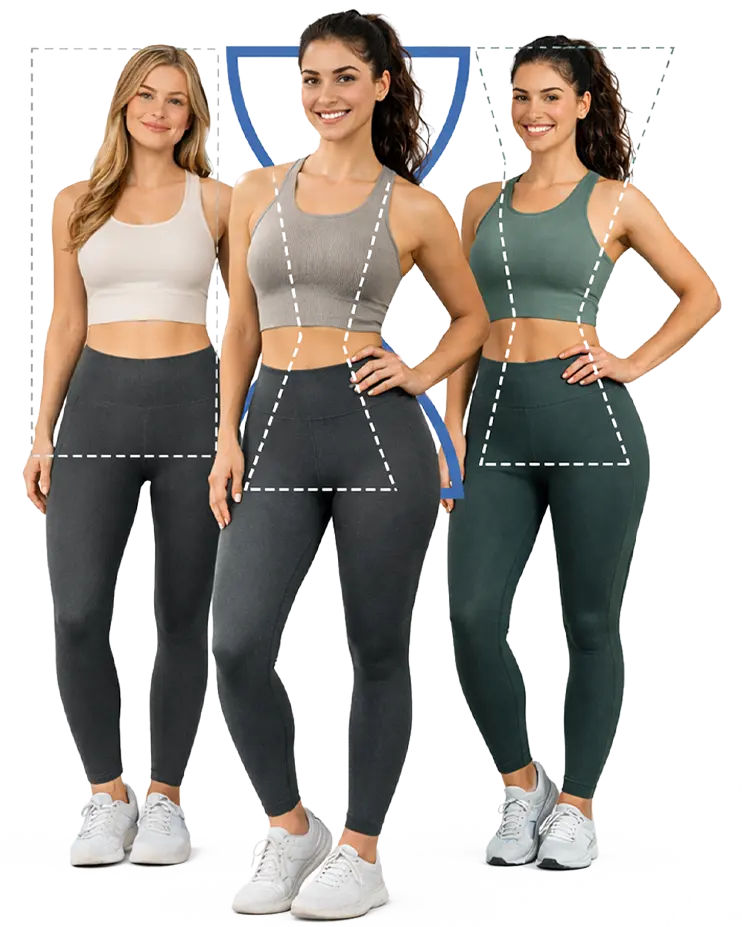
Table of Content
Female Body Shape Chart
Body Type | Bust (in) | Waist (in) |
|---|---|---|
| Hourglass | 34 – 38 | 26 – 28 |
| Top Hourglass | 36 – 40 | 24 – 27 |
| Bottom Hourglass | 32 – 36 | 25 – 28 |
| Rectangle (Banana) | 34 – 38 | 28 – 32 |
| Triangle (Pear) | 32 – 36 | 28 – 32 |
| Inverted Triangle | 36 – 40 | 28 – 32 |
| Spoon | 30 – 34 | 26 – 30 |
What does the body type calculator do?
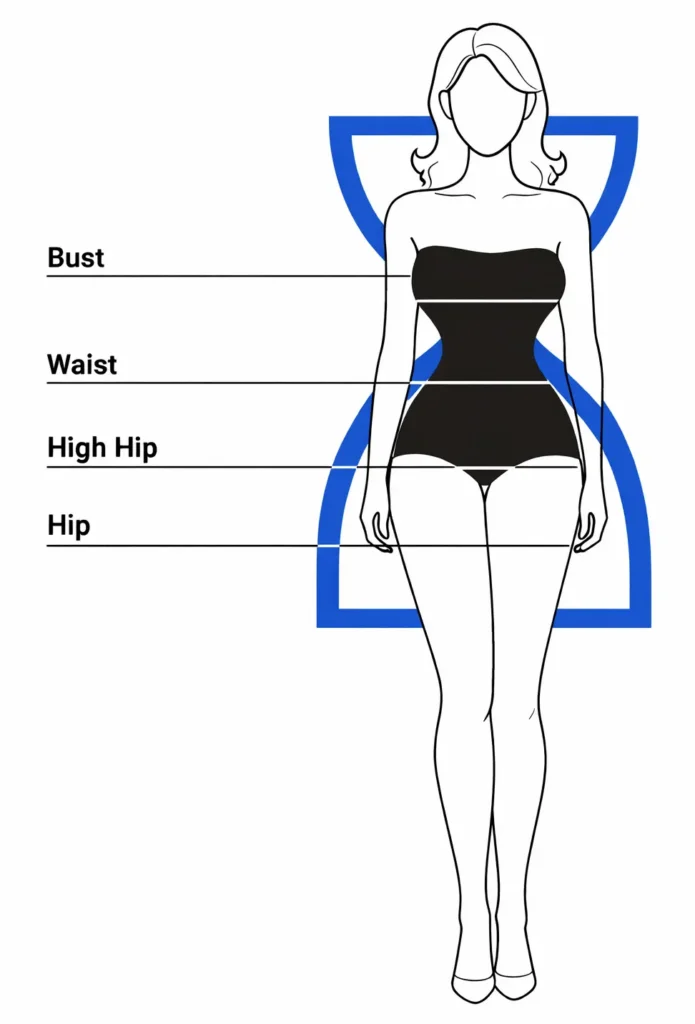
By providing measurements of your body (bust, hip, high hip, waist), you can calculate your body shape. Rather than analyzing yourself in the mirror or matching your silhouette to fruit and geometric figures, the body type calculator lets you know which body type you belong to: hourglass, bottom hourglass, top hourglass, pear, rectangle, inverted triangle, spoon, or rectangle.
Understanding your body ratio can make shopping for clothes much easier and more strategic. It helps you understand your body type and decide whether a particular trend will complement your natural body proportions. Remember, body shapes are not beauty standards; they are only helpful references for selecting the right clothes.
How to Take Body Measurement
Entering accurate measurements is crucial to getting accurate results. Keep your body in a rest position and make sure that the tape is not too tight by breathing in and out. Follow these steps:
Bust
Wrap the measuring tape around the fullest part of your chest. Make sure the tape is not too tight by inhaling and exhaling.
Waist
Your waist is the narrowest part of your torso (right above your belly button). Relax your stomach and keep the tape firm against your skin.
Hips
Hips are the widest part below the waist. Remove your clothes and keep your feet straight so the resulting measurements are as correct as possible.
High Hips
This is the area above, right at the upper swell of your pelvic bone, just above the top of the hip curve.
What is my body shape?
Following are the most popular body types. The body Type calculator will classify your body into one of these types. Keep in mind that not everyone will look exactly like a particular “shape”; not all women in a given category look the same.
Hourglass or X shape
In an hourglass body type, the body shape is balanced, with weight evenly distributed. The bust and hips are proportional, and the waist is clearly defined in hourglass figure.
Top hourglass
It is similar to the regular hourglass body type with a defined waist, in which your bust is visibly larger than your hips.
Bottom hourglass
In contrast to the Top hourglass, this body type has a bust smaller than the hips.
Triangle or Pear
People with a triangle or a pear body shape have a slim upper body and carry more weight in their hips and thighs.
Round:
Individuals with a round-shaped body type have a waist measurement greater than their hip and bust. This means that they have higher levels of abdominal obesity.
Hourglass or X shape
In an hourglass body type, the body shape is balanced, with weight evenly distributed. The bust and hips are proportional, and the waist is clearly defined in hourglass figure.
Spoon
If you are a spoon body shape, your hips are much larger in size than your bust, and you have a well-defined waist.
Inverted triangle or Apple
In an inverted triangle or apple body shape, the upper body is larger, and the hips are subtle and smaller. The shoulders and bust are larger than your hips, with the shoulders being the widest. For many females, having a larger chest might place them in the category of inverted triangle body shapes.
Rectangle, Banana or straight:
The Rectangle body shape also refers to a banana or straight body shape. In this female body type, the body is well proportioned. The bust and hips are almost equal, with a waist that is almost as wide.
Why Knowing Your Body Shape Matters?
Dressing according to your body shape can significantly improve both your appearance and how you feel your best. As iconic designer Coco Chanel famously said, “Fashion is architecture: it is a matter of proportions,” This shows how balance and harmony are at the heart of great style.
Knowing your body shape helps you make smarter fashion choices rather than blindly following every trend. Use our body type calculator for women to identify your unique shape and make smarter styling decisions that highlight your best features.
Common Body Types
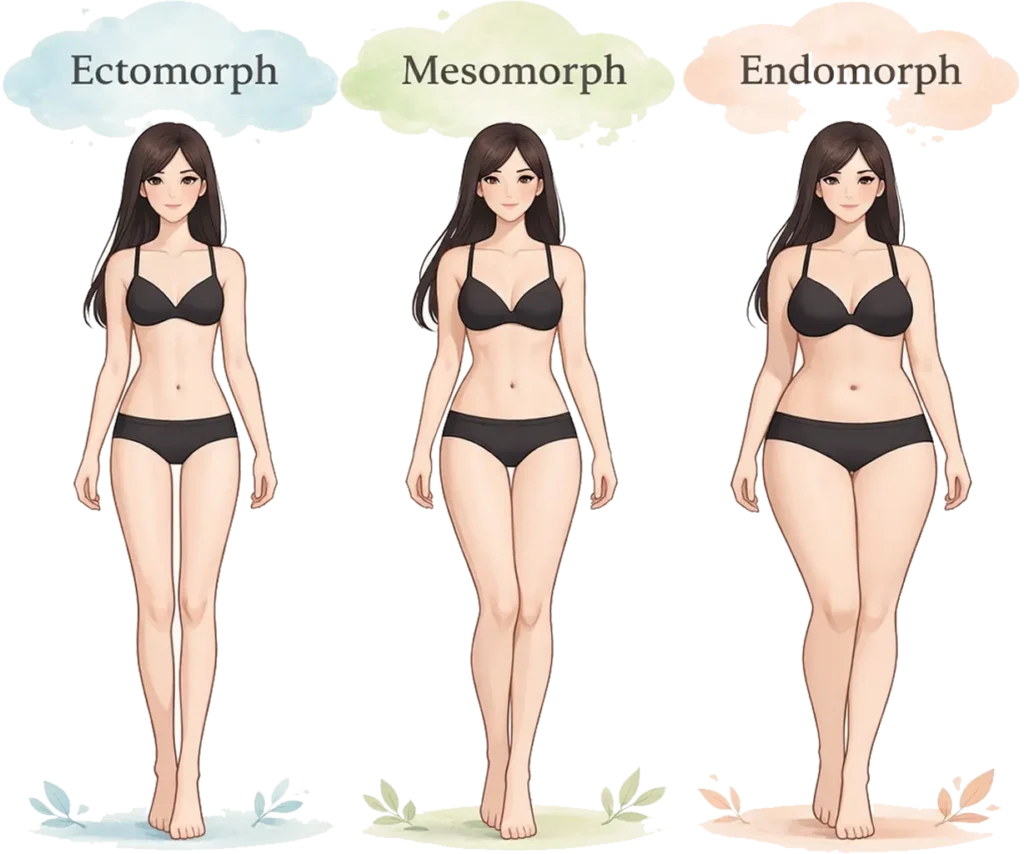
Every person has a unique body structure that is influenced by genetics and lifestyle. However, health and fitness experts often classify human body structures into three common categories, collectively known as somatotypes. William Herbert Sheldon introduced the concept that describes how different people tend to gain muscle, store fat, and respond to diet and exercise.
Ectomorph
- Narrow shoulders and hips
- Long limbs and smaller joints
- Low body fat and muscle mass
- Naturally Fast metabolism
- Difficulty in gaining fat or muscle
Mesomorph
- Broad shoulders and narrow waist
- Naturally muscular and strong
- Gains muscle easily
- Efficient and balanced metabolism
- Responds quickly to exercise
Endomorph
- Wider hips and waist
- Higher body fat percentage
- Slower metabolism
- Gains weight easily
- Strong lower body
Waist-Hip Ratio (WHR) and it’s Important
The waist-hip ratio (WHR) is a key measurement used to assess overall health and the risk of developing serious medical conditions. It represents the ratio of waist circumference to hip circumference. WHR is calculated by dividing the waist measurement by the hip measurement:
Formula:WHR = Waist Circumference ÷ Hip Circumference
For example, if someone has a waist measurement of 34 inches and a hip measurement of 40 inches, their waist-to-hip ratio would be: 34 ÷ 40 = 0.85
According to medical guidance published by WebMD’s overview on Waist-to-Hip Ratio, WHR is an important indicator of fat distribution and its impact on cardiovascular and metabolic health. Research indicates that individuals who carry more weight around their waist often referred to as having an “apple-shaped” body face a higher risk of health problems compared to those with a “pear-shaped” body, where fat is distributed more around the hips. Studies suggest that women with a WHR above 0.8 and men with a WHR above 1.0 are at increased risk of health complications due to central fat accumulation.
WHR has also been linked with fertility outcomes. A peer-reviewed study available through the National Institutes of Health (NIH) PubMed Central database highlights associations between higher waist-hip ratios and reduced fertility rates in women. Research suggests that women with a WHR greater than 0.80 may experience lower pregnancy rates compared to those with WHR values between 0.70 and 0.79.
For men, a WHR around 0.9 has been associated in research with better fertility indicators, improved metabolic health, and potentially lower risks of certain reproductive health conditions. Overall, waist-hip ratio remains a simple yet powerful screening tool for evaluating health risk, fat distribution patterns, and potential reproductive health implications.
References:
- 1. WebMD Editorial Contributors. (n.d.). What Is Waist-to-Hip Ratio? WebMD.
- 2. National Institutes of Health (NIH). (2024). Association Between Waist-Hip Ratio and Female Infertility. PubMed Central (PMC11458166).